Getting Your Room Ready to Rock the School Year

Beautiful-classroom

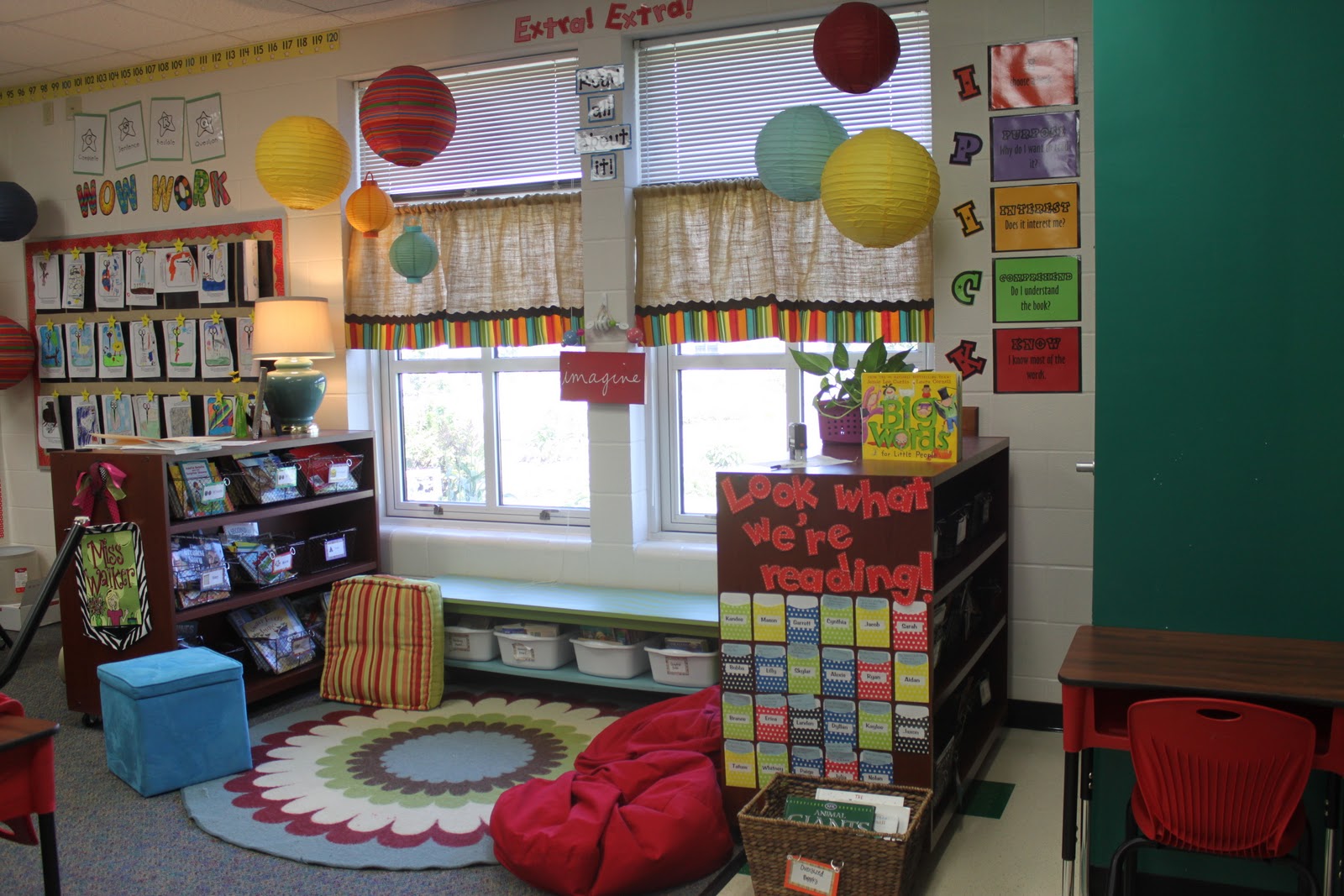
Your students are about to arrive in a few days.  You have your lesson plans set.  But is your room ready to go?

Here are a few tips to creating a safe, welcoming, and learning-focused classroom environment.

Think of Safety and Comfort

Under what conditions will your students do their best learning?  Try to ensure that the lighting, seating, and temperature are all comfortable for students.  This could mean creating some lighter and darker areas based on student preference.  Look around and make sure that there are no hazards and obstacles around the room.  Are the seats arranged in a way that everyone can easily see the board? Can you and your students walk around the room easily?   

It is also helpful to think about your room in terms of spaces.  Where will the library go?  Is there an area that is conducive for learning stations?  In which spaces is your technology being integrated?  Is there a reading nook?  A quiet space for students who need to work alone without distractions?  

Ensure that Decorations Support Learning

Be strategic about what kind of posters and decorations you put up.  Students will be looking at posters every school day, so make sure that they deliver the kind of messages you want to communicate.  Quotes about character can help build social emotional intelligence.  Make sure that posters are age-appropriate (avoid cutesiness in middle school and high school classrooms) and engaging.  Both bare walls and overly-cluttered walls are extremes to avoid: find a healthy balance in your decorations.

Be sure to leave plenty of room to display student work.  By putting up student work, you are indicating to students that their thinking creativity are worthy of admiration.  Focus on putting up work that displays critical thinking and innovation rather than tests or worksheets.  

Creating a “teacher corner” will help your students build a relationship with you.  If you create a teacher corner with items meaningful to you, the students will enjoy getting a glimpse into your life and seeing if they share any similarities.  Ideas of items to include are photos of your family and pets, banners from your college, pictures of bands or sports teams you enjoy, art that you like, and quotes that inspire you.  Remember to keep all items appropriate for school.

Think About Your Room Configuration

Arrange desks with learning in mind. Don’t feel locked into having all of your desks in rows one behind the next like a traditional classroom.  If you intend to do a lot of group work, think about arranging desks into clusters.  If you create a horseshoe shape out of the desks, all of the students are in the front row. One of the nice things about classroom furniture is that it’s easily movable, and different configurations can be set up for different activities.  Experiment and see what kind of set-up works best for you for different learning activities.

Organization and Cleanliness

In order to keep your room ready for learning, it is important to maintain an organized space.  Find a home for everything, and make sure it gets returned there.  Come up with a system for where to place collected papers and assignments. Keep food, gum, and drinks other than water out of your classroom.  Have a supply of paper towels and cleaning wipes on-hand to deal with germs and messes.  Clean spaces allow for optimal learning

Enlist the children in helping you keep your room clean.  Come up with a routine for the end of the block and end of the day to ensure that trash and clutter are discarded appropriately and to ensure that all books, supplies, and furniture go where they belong.

What other tips and techniques have you heard for getting your classroom ready?  Let us know in the comments.

Developing Student Trust

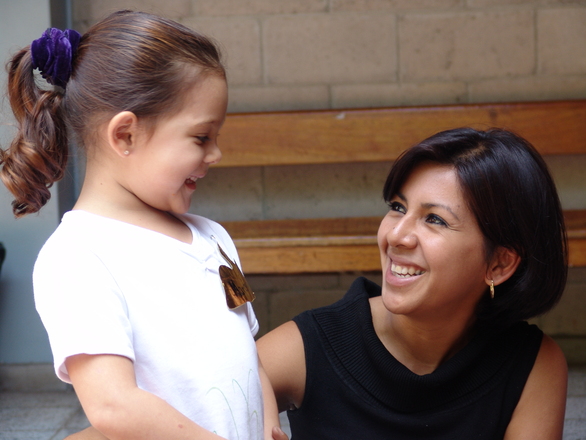
Learning is a social act.  What this means is that your students’ ability and desire to learn from you is inextricably tied to your personal relationship with them.  If a student feels your concern and care for them, it makes them want to learn with you. For this reason, it is absolutely crucial to build a trusting relationship with students from the moment they enter your classroom on the first day.  

Read on to find out some great strategies for building trusting student/teacher relationships.

Get to Know Students as More than Learners

When I was teaching 8th grade, I learned all of my 200 students’ names by the second day (This took a lot of practice and looking at photos the first evening after the first day of school).  The students were shocked and appreciative of the effort that I took to remember them, and building relationships from that point forward was a lot easier.  While memorizing this many names is not easily feasible for most people, that doesn’t mean that you can’t show your students you care in other ways.  Find out what their passions are outside of school and ask them for updates on them.  Attend school plays, sports games, and dances.  You will begin to learn about your students’ lives, and in turn they will see you are more than a content teacher.

Be Friendly (Not their Friend)

Some educators advise new teachers “don’t smile until Christmas,” so that they can establish control in their classroom.  In my opinion, adhering to this adage just makes a teacher seem grouchy.  A teacher can be clear in their behavioral expectations while still being friendly.  It is important to maintain a clear boundary between friendly a friend, however.  Your student needs you to be a responsible adult figure in their life, not another friend.  Don’t try to “be cool” or popular to win approval from students.

Be a Stable Role Model in their Lives

Unfortunately, many students lives are filled with instability and chaos.  They need someone they can rely on to be there for them day in day out, and often this has not been the case for them.  Show your student that you will be there for them, and honor all of your promises.  Some students whose trust has been broken by adults previously in their lives may be more resistant to trusting you initially.  Do not give up, and tell them you will not give up.  Prove through your actions that you will be there and that you care.  Model healthy emotional patterns and respect for the child.  Your ability to break through to a child like this will positively impact their ability to form positive relationships with everyone else in their lives as well in the future.

Be A Good Listener, and Know When to Step In to Offer Assistance

Sometimes students just need someone to hear them and affirm how they are feeling.  They want moral support when they are having a rough day/week/year.  Since they spend most of their day at school, finding someone whom they trust is critical to the development of their self-esteem and resilience.  Most of the time, the act of listening supportively and actively is sufficient, but sometimes your student needs you to offer advice or even step in to help them through a tricky situation.  If they are being harmed, remember you are a mandated reporter, and that it is ethically and legally imperative that you report this to child services immediately.  Other situations are not so clear cut.  If you are unsure about the best way to help a child with a situation in school or external to school, reach out to us here at EdCourageMentor- we’re here for you!

Build Children Up

And remember, be positive, celebrate students’ victories and growth, and encourage them.  Isn’t this why you became a teacher after all, to positively impact lives?

caring-teacher-1622554
Do you have any other ways you’ve found effective to build student trust?  Share in the comments below.

Welcome to the EdCourageMentor Community

Dear New Teacher,

Welcome to EdCourageMentor!  Before we explain how we are going to improve your life as a teacher (and human being), we want to give a little bit of background about why we exist.

There are many misconceptions about teaching. You’ve probably heard teaching romanticized by the uninitiated: the cushy hours, the Summers off, the ease factor of the job. Little do these uninformed realize the sheer hours that teachers put in planning, grading, teaching, assessing, counseling, coaching, attending meetings… It’s exhausting merely listing the myriad of roles that a teacher fills.  Furthermore, what other job do you know where the employee has to plan their bathroom trips in advance?  More insulting, however, is the oft-repeated adage that “those who cannot do, teach.”  This could not be further from the truth: some of the teachers I’ve encountered have been some of the most talented, innovative, forward-thinking people I’ve had the privilege to know.  They could have done anything; they chose to teach.

There are many reasons that you may have decided to teach.  You were inspired by an impactful teacher in your life.  You want to change lives. You love the content of your field and want to educate others about it.  You have a passion for social justice.  You view teaching as a noble endeavor.  You think education can be transformative.  You think teaching is fun.  You enjoy the challenges presented by teaching.  You have a passion for working with children.  You’ve been told you have a knack for teaching.  You love learning.  Do any of these resonate with you?  Regardless of your impetus to teach, here you are now; the classroom is your oyster.

Be forewarned, however: Teaching is not for the faint of heart- it is an act that is simultaneously audacious and thrilling.  Every day in your classroom, up to forty sets of eyes will be watching you, forty sets of ears will be hanging on every word you say, forty brains will be recording your every move.  You hold the awesome responsibility not just to teach your students content but to impart the knowledge and skills to take on life as a successful human being.  I say this not to scare you, but to prepare you honestly for some of challenges that lie ahead.

But here’s the good news: there is no job more challenging or important if done right.

And here’s the even better news: you don’t have to do it alone.  In some schools, you are lucky enough to be placed with a supportive mentor teacher, who will take under her/his wing (hopefully that is you!).  Most teachers are not that lucky.  This is a large factor in the attrition rate of teachers: the average career-span of a teaching career is a paltry 3 years (although most people don’t become teachers with the intention of leaving the field).

Fear not!  That’s where we come in: your EdCourageMentor.  We were all new teachers once, and although every experience is unique, we have shared many of your struggles. We are sharing the things we wished we would’ve heard as a new teacher.

This is so much more than a blog, this is a community of teachers supporting teachers. Although we are virtually based, we are here for you, physical human beings, providing advice, encouragement, useful resources, self-care tips, classroom management and instructional strategies, humorous teaching anecdotes- anything that will allow you to grow as a teacher and continue to find joy in your career.  We will learn together, reflect on our practice, and support one another.

It takes courage to shape the heart and minds of youth.  Let’s do this together!

Welcome to the EdCourageMentor community- we are happy to have you here!

Warmly,

Your EdCourageMentor Team