Staying Human in Education Right Now 

Curiosity, Dignity, and Mattering in Unsteady Times

By Rob Evans, Ed.S.

A few weeks ago, I listened to a conversation between Debra Wilson, President of NAIS, and Jennifer Breheny Wallace about her work on mattering. Later that evening, I began reading Donna Hicks’ Leading with Dignity. Different voices and different frameworks, but both circled the same essential concern: the conditions that allow people to feel seen, valued, and fully human in the spaces we teach, lead, and inhabit.

This concern feels especially urgent right now, particularly for newer teachers. Many are navigating parent anxiety, polarized school communities, social media scrutiny, AI disruption, and the quiet pressure to “get everything right” while still figuring out who they are in the classroom. Under that kind of strain, teaching can subtly shift from a human practice to a survival exercise.

When this happens, something essential begins to erode. Curiosity fades, dignity gets compromised, and mattering disappears. Classrooms start to feel more like performance spaces than learning communities.

I have spent much of my career paying attention to the difference between classrooms that feel alive and those that feel brittle. Often, the difference has little to do with the lesson plan and everything to do with three deeper conditions: curiosity, dignity, and mattering.

Curiosity is not just about whether students are engaged; it shows up in small, everyday moments. It’s in the teacher who pauses mid-lesson to say, “That’s a great question. I don’t know the answer yet; let’s figure it out together.” It’s in the student who feels safe enough to say, “I’m confused,” instead of pretending to understand. It’s in the classroom where discussion drifts slightly off-script because students are genuinely wrestling with ideas, not just chasing the “right answer.”

New teachers often feel pressure to appear fully in control. But students can tell when curiosity is real and when it is performative. When adults model genuine wondering, classrooms become places of exploration instead of compliance.

Dignity operates just beneath the surface of every interaction. It shows up when a teacher corrects a student privately instead of calling them out publicly. It shows up in how sarcasm is used or avoided altogether. It shows up when a teacher says, “You’re not in trouble; you’re in process,” after a mistake. It shows up in whether students’ names are pronounced carefully and consistently.

Students notice these things, and so do colleagues. Dignity is not communicated through posters on the wall; it is conveyed through tone, pacing, attention, and presence.

Mattering is what happens when dignity is consistently honored over time. A student feels they matter when their idea genuinely shapes the direction of a discussion. A quiet student feels they matter when the teacher intentionally creates space for their voice. A struggling student feels they matter when a teacher says, “I’m not giving up on you,” and follows through. A first-year teacher feels they matter when a mentor asks, “What are you noticing about your students?” instead of only offering advice.

Without mattering, even high-performing classrooms can feel hollow. Students comply, teachers function, but no one feels fully alive in the work.

Two Frameworks, One Truth

Engaging with both Hicks’ and Wallace’s work highlighted how naturally their ideas fit together. Donna Hicks names the ethical foundation: every person carries inherent dignity, and leadership fails when that dignity is violated through exclusion, silencing, humiliation, or disregard. Jennifer Breheny Wallace names the lived experience: mattering describes how people come to feel that their worth is recognized in community when they are noticed, valued, and meaningfully needed. Put simply, dignity is what is owed to every person; mattering is how people know they are receiving it. In schools, this distinction matters deeply. We can claim to value dignity in theory, but if students and educators do not experience that they matter in practice, the culture quietly erodes.

You can often see the absence of mattering, too: the student who stops raising their hand because their participation doesn’t seem to change anything, the teacher who stops trying new strategies because no one seems to notice, and the classroom where participation becomes transactional instead of relational.

What Schools Actually Need Right Now

In moments like this, schools often reach for new initiatives, new programs, and new tools. But what’s usually missing isn’t innovation; it’s attention to the human conditions that allow learning to take root.

Curiosity has to be protected, especially when pacing guides and testing pressure make exploration feel risky. Dignity has to be practiced, especially when frustration runs high. Mattering has to be cultivated, especially when teachers are juggling too many students and too many demands.

For Newer Teachers Especially

Staying human in education right now does not mean lowering expectations or avoiding rigor. It means recognizing that rigor without relationship collapses under pressure. It means remembering that every classroom is, at its core, a web of human relationships and that how those relationships feel determines how deeply students learn.

For newer teachers, this can be both grounding and freeing. You don’t have to be perfect. You don’t have to have all the answers. But you do have to attend carefully to the humanity of the space you’re building.

Protect curiosity.
Honor dignity.
Cultivate mattering.

When those three elements are present, classrooms don’t just function; they become places where students grow academically and personally and where teachers can sustain themselves in the work over time.

Everything meaningful in education grows from there.

Rob Evans is an educator and writer with more than two decades of experience in classrooms, school leadership, and nonprofit education spaces. He is currently writing and reflecting on curiosity, dignity, and mattering in education, drawing on his lived experience working with students, teachers, and school communities. Rob lives in Los Angeles with his wife and is the father of four children, two of whom are adults.

He welcomes conversation at rob@evansstrategic. com.
“The World Was Our Classroom”: An Interview with an Indigenous Educator Winona B.

Interview conducted by Miriam Singer

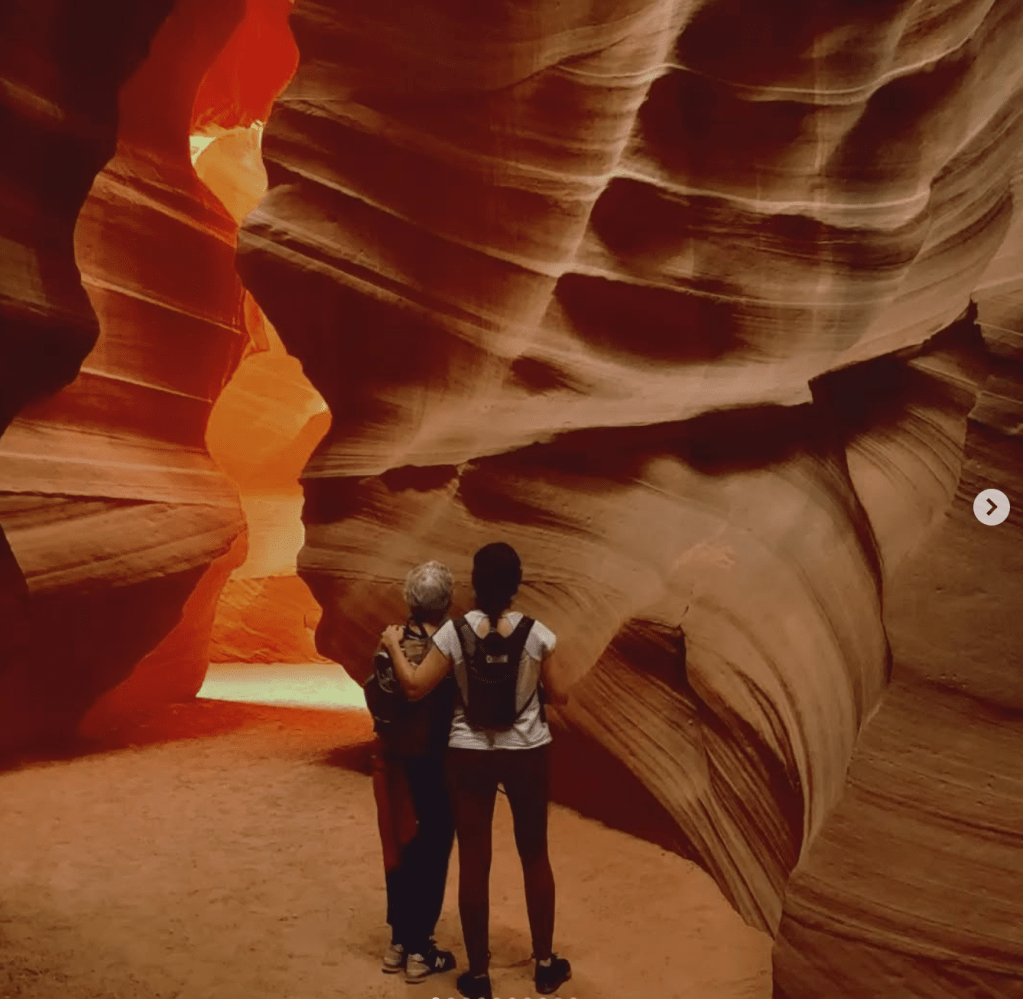
A few summers ago, my mother and I journeyed to Upper Antelope Canyon, a slot canyon located on the land of the Navajo Nation, known for its colorful striations illuminated by beams of light pouring into the tight chasm.  I was looking forward to this adventure experiencing a wonder of the natural world, but what I didn’t expect to happen was to meet a new friend and colleague.  

Since this earthly wonder is on the sacred land of the Navajo, only members of the nation are permitted to lead tourists through their land, so we arranged with a Navajo tour company to meet our guide.  A young woman pulled up to our meeting spot in a white, open-air jeep, greeting us with a hearty Ya at eeh,  which means both hello andit is good in Navajo, introducing herself as Winona. As we bounced over the uneven, desert terrain heading towards the canyon, Winona shared the history of the land of her people.  The Navajo, who call themselves Diné, or “the People,” call Upper Antelope Canyon,Tsé bighánílíní, the place where water flows through, alluding the way the canyon was formed through erosion.  When she shared that during the year she was a teacher, my ears perked up, and I shared that I too am an educator.  As you may already know, it is an unspoken agreement among educators globally that when we meet each other there is an instant bond, and a curiosity to learn from one another.  As interesting as the winding canyon proved to be, my conversations that started that day with Winona have been even more engaging.

Recently, I was inspired to collect some of the fascinating learnings I have gleaned from Winona about the educational principles that impact the teachings of Diné, when I thought to myself, Why not let Winona share her ideas directly?  When I called her, she was excited to collaborate, and also busy with her summer hustle leading tours.  We agreed that I would record a conversation with her and share the transcript (with a pseudonym as she humbly eschews fame).  The interview that follows reflects an edited version of my recent conversation with Winona.

M: Hi, Winona.  It’s nice to hear your voice- it’s been too long!  Thanks for sharing your knowledge about Navajo teaching practices with the Edcouragementor community. We are excited to learn from you. 

W: Thanks for making the time to chat.  I’m happy to share what I have learned from my elders and community with the larger world of educators.

M: Speaking of what you’ve learned, how did you become a teacher?

W: I grew up here on the land of the Navajo Nation, and what people don’t know is that we are our own sovereign nation within the US, with our own laws and president.  There was very little separation between school and the outside: the world was our classroom, and every Elder was our teacher.  In this way, we grew up to see ourselves as future teachers, and that learning was integrated into everything that we do, whether it was gathering herbs to cure a headache and learning tribal medicine, beading a ceremonial jacket, or listening to a dramatically told story about our ancestors around the fire.  So in some ways, I’ve always seen myself as both a teacher and a student of the world.  Moving to the classroom was a logical step for me in my mind.

M: That sounds like an amazing and aspirational mindset to grow up with.  How does being Navajo impact your teaching?

W: Yes, absolutely, it was a beautiful way to grow up.  And I see how I was raised influences my teaching decisions.  In college, I learned about incorporating voice and choice into lessons to engage students, but that is already a practice I had ingrained in me from my youth.  So much of how we learned from our native teachers asked us to use not just our minds, but our bodies to build, to discover, and to create.  Everything was interconnected and connected to something that mattered in our world.  This made our learning seem useful.  I never forget that when thinking of lesson design for my own students.  The textbook comes last, especially when we have the whole world to learn from.

M: Did you ever have a teacher growing up that didn’t resonate with this ideology?

W: Oh definitely.  I remember in high school we had a non-Navajo math teacher who expected us to drill and kill one algebra problem after the next.  It was connected to absolutely nothing except itself, and was so disengaging, especially compared to the other ways in which we were invited to learn.  We were encouraged to honor our ideas and our own approaches to learning, something that this teacher couldn’t have been farther away from.

M: It sounds like that with time you’ve been able to reflect and discern that his teaching methodologies were not only unengaging, but also very different from the indigenous approach that you were raised with.  Are there other principles that you feel are at the heart of indigenous teaching?

W: I think one thing that is really integral to our ancestral ways is recognizing the privilege we have in learning, that knowledge is a gift, a gift that supports not just one’s self, but also our families, the spirits, the community, our ancestors and the land that we live on.  We don’t take for granted what we can learn from both the land and from others; it’s very relational in that way.  Also, when we look at learning, it’s more than just factual knowledge: it also encompasses that whole being, including the body, soul, and spirit of a human.  We were doing “the whole child” approach thousands of years before it became popular- we were the original native hipsters! (laughs).

M: (laughs) That’s funny, but we should take a moment to recognize that so much of what you’ve been referencing as key to indigenous teaching practices has only relatively recently become celebrated through progressive education.  With that in mind, what are ways that you would encourage other educators to incorporate indigenous teaching principles into their teaching practice?

W: A few things come to mind.  First, make the learning authentic and connected to the world.  The more your students can learn from the land and natural world, their elders, the ancestral stories (whatever their ancestry might be), and each other, the more impact they will make.  Speaking of stories, stories unlock our imaginations, teach us values for how we can live in harmony with each other and the earth, and are important building blocks of culture.  Never stop telling stories, and invite others in to share their stories too.  And like I said earlier, everything is interconnected; make sure your students see that through how you set up your classroom learning activities.

M: Is there anything else you’d like to share with the Edcouragementor educators?

W:  (laughs) Come visit!  Truly, even if you don’t visit Antelope Canyon, find the local people whose land you live on and try to learn from them.  There is nothing like broadening your world by learning from the people who have been here for a long time.

M: Yes!  I hope everyone will take up your suggestion.  Thanks again for your wisdom.

What stood out to you from what Winona shared, Edcouragementor community?  What other elements of indigenous education have you encouraged in your own learning journey?  Let us know in the comments!